
Hopewell’s older neighborhoods, riverfront parcels along the Appomattox River, and former industrial areas create tree-care needs that are different from those in newer suburbs. Smaller lots, mature oak and sweetgum trees, and compacted soil from years of development all affect how work needs to be planned. Our network of tree care professionals in Richmond knows how to inspect mature trees, address root pressure near older foundations, and remove dangerous limbs while keeping Hopewell properties safe and accessible.
That is why so many property owners in Hopewell, VA, turn to Arbor Tree Care for year-round maintenance.

Prefer to Talk to An Expert?
(804) 208-0771
Why Hopewell Property Owners Trust Local Professionals to Get It Right
Because they work in and around the area, these professionals understand the mature hardwood canopy, tight residential layouts, and riverfront soil conditions that shape tree work in Hopewell. Every job is completed with methods and equipment suited to local properties, including sites with unstable ground, limited access, and exposure to strong storms.
From expert stump removal solutions near narrow fence lines along Appomattox Street to professional tree pruning services for mature oaks over homes in the Crescent Hills neighborhood, each project is completed with careful planning and dependable results.
If you care about your property, local contractors can help keep it neat, stable, and safe in Hopewell.
Our Tree-Service Services
in Richmond, VA, Include
A Service Area Built Around Hopewell Neighborhoods
Mature trees and narrow lot lines mean Hopewell tree work has to be tailored, not standardized. Local professionals adjust their approach for riverfront parcels, infill lots, and properties bordering older industrial corridors.
Whether it’s a historic bungalow in Crescent Hills, a riverfront lot along the Appomattox shoreline, or a commercial site near City Point, the work is matched to the property.
From tree trimming and tree removal to storm damage and root protection, services are planned around each site’s layout, tree condition, and access needs.
Hopewell’s Dense Urban Canopy, Shaped by History
Hopewell grew quickly in the early 1900s as an industrial and residential city at the meeting point of the Appomattox and James Rivers. Dense housing, later periods of change, and years of heavy development left behind compact soil, aging infrastructure, and a mature tree canopy that still influences how tree care must be performed today. That history shows up in old root systems, crowded canopy lines, and weakened tree structure across many properties.
Mature Hardwood Overhang and Structural Decay
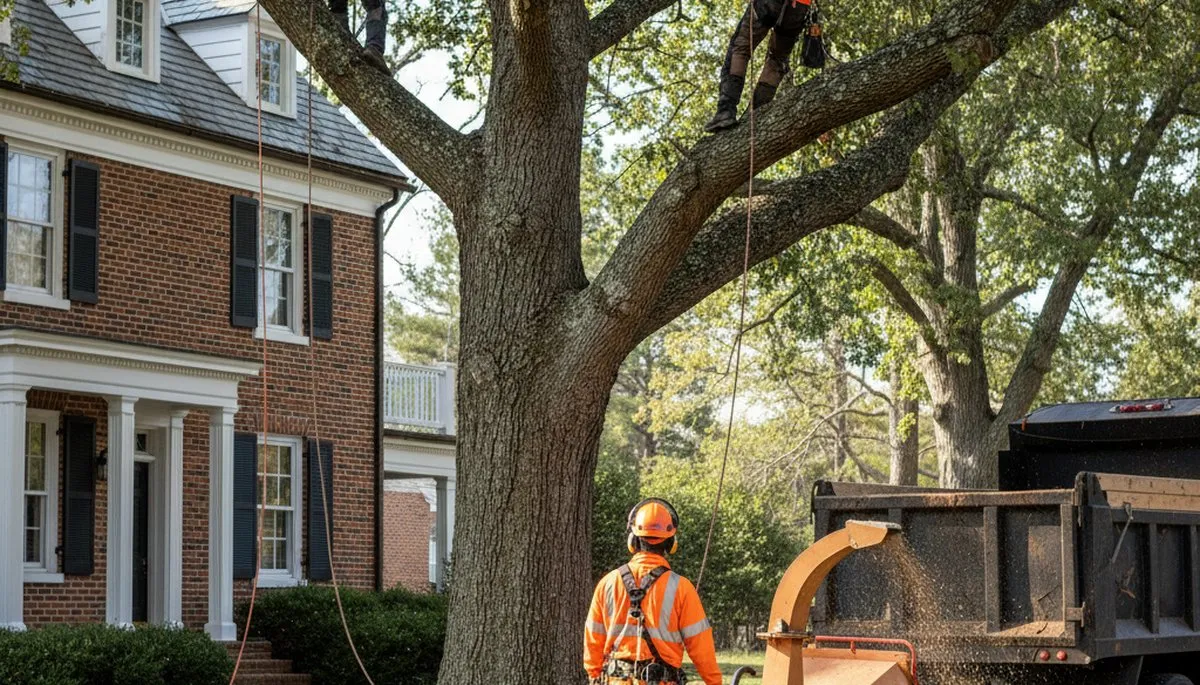
In many parts of Hopewell, especially Crescent Hills and City Point, oaks, sweetgums, and elms have outgrown the spaces where they were originally planted. Branches now reach over roofs and utility easements, while hidden decay can weaken the tree from within and create real risks for homes and people below.
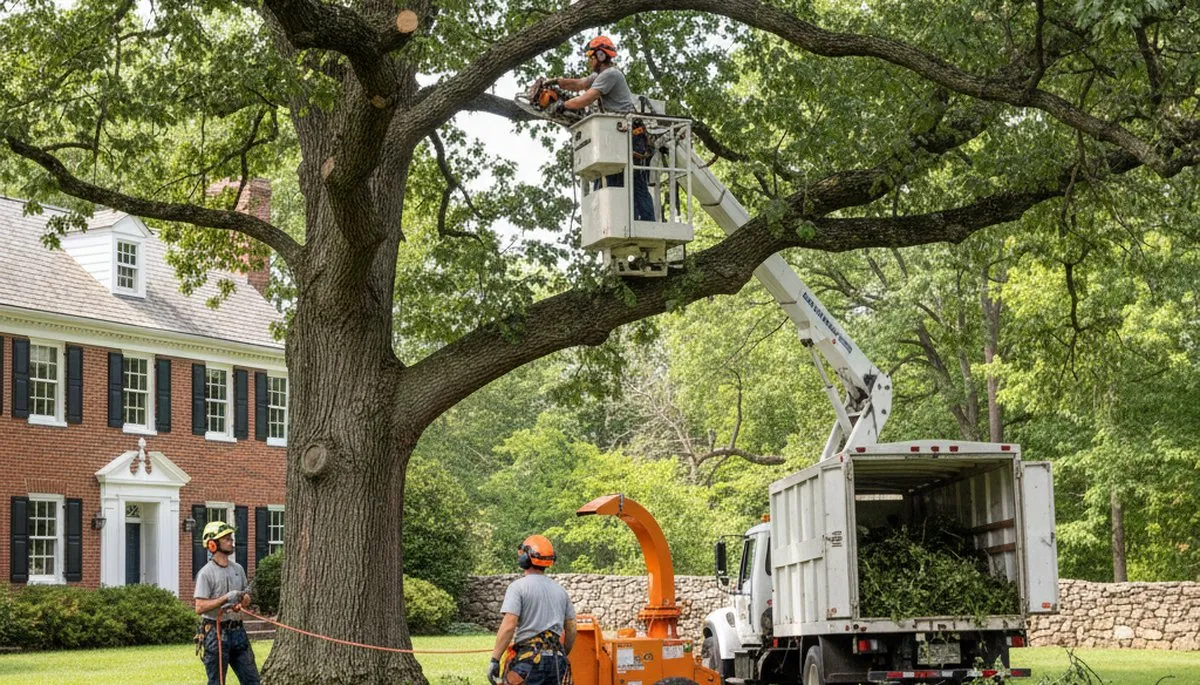
Local professionals manage these issues with crown reduction, deadwood removal, and cable bracing when appropriate, helping reduce hazards and improve long-term access around the property.
Riverfront Soil Instability and Root Exposure
The Appomattox River adds scenic value and supports mature riparian trees, but saturated ground near the shoreline can also lead to exposed roots and leaning trunks. Erosion on low-lying lots may destabilize root systems and raise the risk of tree failure during periods of heavy rain.
Professionals address these areas with root zone assessments, selective removal of compromised trees, and cleanup methods that account for shifting soil near the riverfront.
Soil Compaction and Fungal Disease Pressure
After years of dense development and constant foot traffic, many Hopewell trees struggle to take in water and nutrients through compacted soil. That stress can weaken roots and leave canopy trees more vulnerable to fungal issues and pests in the area’s humid climate.
Trusted pros respond with tree fertilizing, targeted tree disease treatments, and soil aeration to support healthier growth and reduce the spread of fungal problems to nearby trees.
Storm Season and High-Wind Canopy Damage
Because Hopewell sits near both the James and Appomattox Rivers, storm systems can channel strong winds through the area. That often leads to broken limbs, stripped canopies, and tree failures on residential and commercial properties alike.
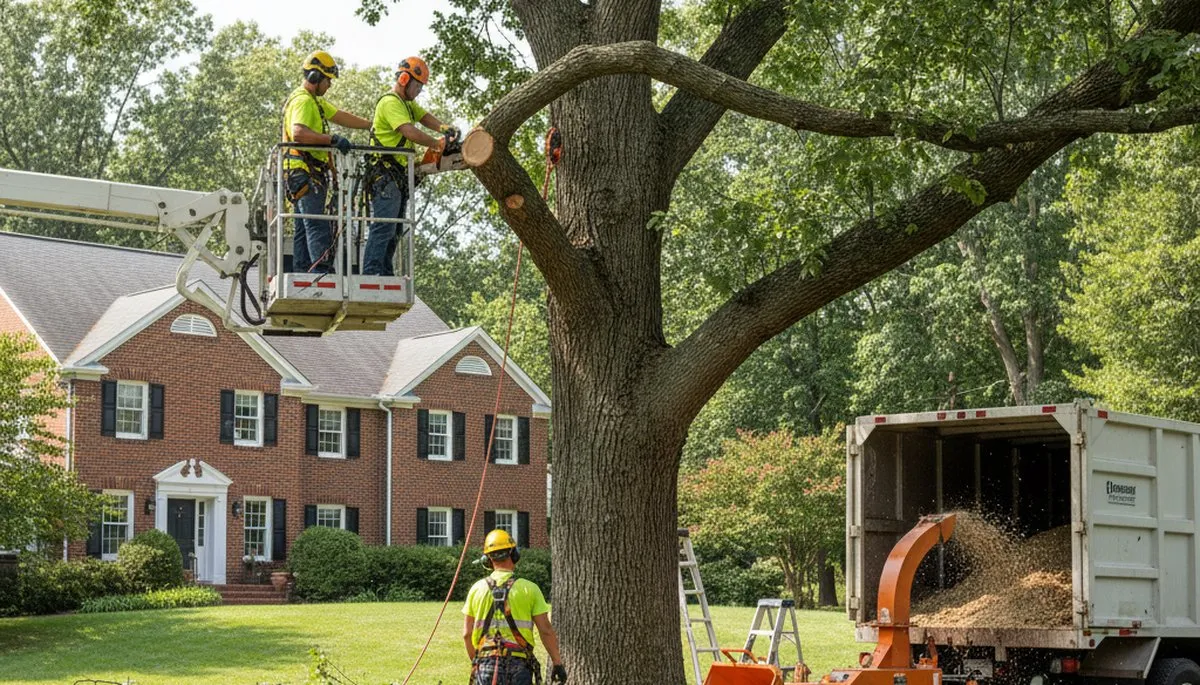
Experienced crews handle storm cleanup with aerial lifts, rigging equipment, and debris management practices that help restore access and reduce further damage during high wind and heavy rain.
Narrow Access Corridors and Fenced Lot Constraints
Many Hopewell properties have tight side yards, privacy fencing, and small gaps between structures, which can make tree work much more difficult. Safe equipment placement and controlled canopy work become even more important on these sites.
Local pros use compact equipment and climbing techniques when needed, focusing on precision and property protection so tree services can be completed even in limited-access spaces.

Begin your tree service project today!

Tree Services in Hopewell, VA: Care for Every Season
From routine maintenance to urgent storm response, local crews help keep properties clean, safe, and structurally sound throughout the year:
Routine Tree Trimming and Pruning in Hopewell, VA
- Canopy line trimming for mature oaks along Appomattox Street — Seasonal tree trimming helps keep long limbs from reaching roofs and utility lines in older neighborhoods.
- Crown thinning for sweetgums in the Crescent Hills neighborhood — Opening the canopy improves airflow and light, which can ease fungal pressure during Hopewell’s humid summers.
- Structural tree pruning for young street trees near City Point Road — Early pruning helps guide strong branch development and lowers the risk of weak angles or co-dominant stems later on.
- Deadwood removal from riverfront elms along the Appomattox shoreline — Clearing dead limbs from trees in wet soil zones helps reduce the chance of sudden branch failure during wind events. Crews serving tree trimming services in Colonial Heights, VA use the same riverfront-aware approach across nearby communities.
- Pre-storm canopy reduction for large hardwoods near residential structures — Reducing canopy spread before storm season can limit wind stress on both the tree and the buildings nearby.
Book seasonal trimming before summer storms peak to protect your Hopewell property and support healthier canopy growth all year long.
Tree Removal Services in Hopewell, VA
- Hazardous tree removal near aging foundations in Crescent Hills — Trees that have become unstable near older homes often require sectional removal to avoid damage to siding, roofs, and foundations.
- Storm damage tree removal after wind events along the James River corridor — Fallen, split, or uprooted trees are cleared quickly to reopen driveways, walkways, and utility access.
- Dead tree removal from compacted urban lots throughout central Hopewell — Standing dead trees in busy areas create serious risks and are removed with as little disruption as possible.
- Leaning tree removal from riverfront parcels near the Appomattox shoreline — Trees showing root heave or a strong lean toward structures are assessed and removed before saturated soil makes the problem worse.
- Tree removal for lot clearing near City Point's commercial corridor — Redevelopment and landscape updates often require full clearing, handled with care for access, debris control, and neighboring properties.
Removing dead, damaged, or unstable trees early helps reduce liability and keeps Hopewell properties easier and safer to access all year.
Stump Grinding and Cleanup in Hopewell, VA
- Stump grinding for removed oaks in tight residential side yards — Compact grinding equipment can fit narrow lots without fence removal, helping eliminate trip hazards and unwanted regrowth.
- Root flare grinding near aging sidewalks along Washington Street — Exposed roots that have lifted or cracked pavement are ground down to grade, restoring safer pedestrian access on older streets.
- Stump removal from riverfront lots with saturated soil conditions — Stumps left in wet soil along the Appomattox shoreline can speed up decay and attract insects, so prompt removal helps protect the property.
- Multi-stump cleanup after storm-related tree loss in residential blocks — After major storms, several stumps may be removed together to restore yard use and limit pest activity across affected properties.
- Post-removal site cleanup and debris hauling throughout Hopewell — Wood chips, debris hauling, and final grading leave the site tidy and usable once the work is finished. Crews also handle stump grinding in Chester, VA using the same cleanup standards used across the region.
Detailed stump grinding and cleanup help stop regrowth, remove pest habitat, and return outdoor space to a usable condition on Hopewell properties of all sizes.
Emergency Tree Services in Hopewell, VA
- 24/7 fallen tree response after storm events across Hopewell neighborhoods — Emergency tree services teams respond quickly after wind and rain to remove fallen trees from driveways, entries, and road access points.
- Storm-damaged limb removal from rooftops and structures near City Point — Partially attached limbs resting on structures are rigged and removed carefully to reduce the chance of more damage during lingering wind or rain.
- Emergency canopy clearing for blocked utility access along Randolph Road — Large limbs or trees blocking utility corridors are cleared on priority timelines to help restore access for service crews.
- Uprooted tree stabilization and removal along the Appomattox River corridor — Trees destabilized by saturated soil are assessed and removed before shifting causes more damage or reaches the waterway.
- Post-storm debris removal and site safety assessment throughout Hopewell — After severe weather, full debris cleanup and a property-wide inspection help identify remaining hazards before they create additional problems.
When tree failure or storm damage threatens your property, local emergency crews move fast to protect structures, restore access, and keep Hopewell properties safer after severe weather.